
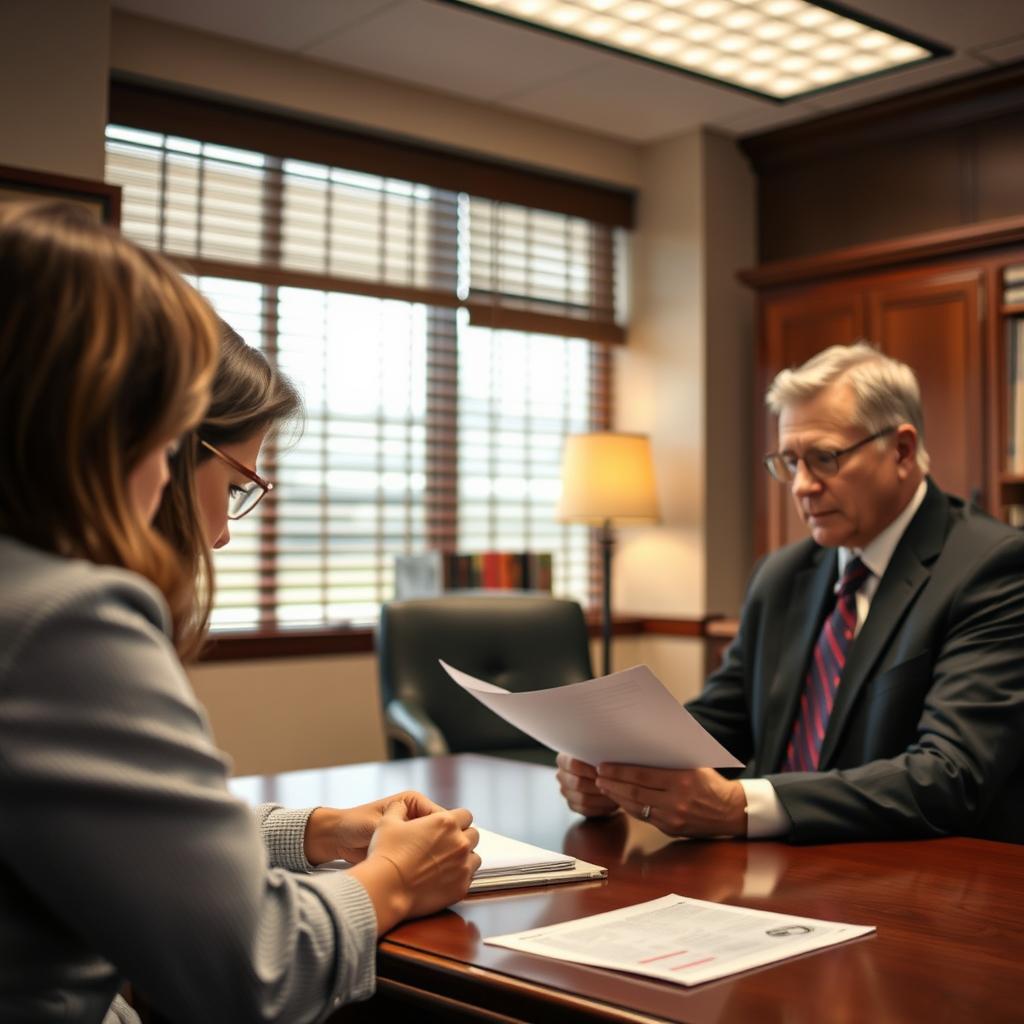
What happens at a DUI arraignment in Broome County
You were driving along State Route 17 late one evening when a Broome County sheriff’s deputy pulled you over. After field sobriety tests and a breath test, you were arrested for driving while intoxicated. Now you have a court date and you are wondering what happens next. In New York, the first step after a DWI arrest is the arraignment. At the arraignment in Broome County, you will appear before a judge, the charges against you under New York Vehicle and Traffic Law § 1192 will be formally read, and you will be asked to enter a plea. The court will also consider whether to set bail or release you on your own recognizance. Having experienced counsel at this stage can influence how the case proceeds. Law Offices Of SRIS, P.C. represents clients at DUI arraignments throughout Broome County. Call (888) 437-7747 to request a consultation. Law Offices Of SRIS, P.C. – Advocacy Without Borders.
What happens during a Broome County DUI arraignment
The arraignment is not a trial and no evidence is presented. Its purpose is to inform you of the charge, ensure you have counsel, and set conditions for your release until the next court date. The judge will read the specific DWI charge, which may be a misdemeanor or felony depending on your prior record, and you will enter a plea of guilty, not guilty, or no contest. If you plead not guilty, a future date for a pretrial conference or hearing will be scheduled. The court will also decide whether to release you on your own recognizance, impose conditions such as an alcohol interlock device, or set bail. In Broome County, the arraignment may take place in a local town or village court or, for felony cases, in Broome County Supreme Court. Our firm appears in courts throughout the Southern Tier and can advise you before you enter a plea.
The judge may also suspend your driver’s license at the arraignment if you refused a chemical test. Because of the immediate consequences, preparing for the arraignment with an attorney is prudent. Law Offices Of SRIS, P.C., reviews the circumstances of your arrest, examines whether the stop was lawful, and advises you on the trusted plea to enter. We then advocate for release conditions that allow you to maintain employment and meet your obligations while your case moves forward.
Frequently asked questions about DUI arraignments in Broome County
What exactly is an arraignment in a New York DUI case?
An arraignment is the initial court appearance where the defendant is formally advised of the charges and enters a plea. In New York, under the Criminal Procedure Law, the arraignment must occur without unnecessary delay. At this hearing, the judge will inform you of your right to counsel, assign an attorney if you cannot afford one, and address bail or conditions of release. No testimony or evidence is presented; the arraignment is procedural. The next court date is set after you plead, and the case moves forward toward motions or trial.
What plea should I enter at my DUI arraignment in Broome County?
Most defendants enter a plea of not guilty at the arraignment to preserve all legal options. Pleading not guilty does not mean you are denying the charge forever; it simply gives your attorney time to review the evidence, file motions to suppress evidence if the stop was unlawful, and negotiate with the prosecutor. Pleading guilty immediately may result in a conviction on your record without the chance to explore diversion or reduction. At Law Offices Of SRIS, P.C., we advise clients to plead not guilty and allow us to investigate the case.
Will I go to jail at my arraignment for a DUI?
Most first-time DWI defendants are released on their own recognizance or posted bail and do not go to jail at the arraignment. The judge considers factors such as ties to the community, prior criminal history, and the seriousness of the charge. If the arrest involved an accident or injury, bail may be set higher. Having an attorney present who can argue for release on recognizance or reasonable bail can reduce the chance of being taken into custody.
Can the judge suspend my license at the arraignment?
Yes, the judge may suspend your New York driver’s license at the arraignment if you refused a chemical test. Under the state’s implied consent law, a refusal triggers license suspension regardless of the outcome of the criminal case. Even without a refusal, the court can impose restrictions. Law Offices Of SRIS, P.C. can request a conditional license or a hardship privilege to allow you to drive to work or school while your case proceeds.
What is the difference between a DWI and DWAI in New York?
New York distinguishes between DWI (driving while intoxicated) and DWAI (driving while ability impaired) based on the level of impairment. DWI under VTL § 1192(2) requires a blood alcohol concentration (BAC) of 0.08% or higher and is a misdemeanor. DWAI under § 1192(1) is a violation, not a crime, for a BAC between 0.05% and 0.07%. A DWAI conviction carries no criminal record, while a DWI conviction does. The charge you face depends on your BAC test result and the officer’s observations.
Do I need a lawyer for my arraignment?
While you are not legally required to have a lawyer at your arraignment, having counsel present is strongly advisable. The decisions made at the arraignment – the plea entered, bail conditions, and license suspension – can have long-term consequences. An attorney can argue for release without bail, negotiate with the prosecutor, and start building a defense strategy immediately. At Law Offices Of SRIS, P.C., we appear with clients at arraignments throughout Broome County to protect their interests.
What is a felony DWI and how does it affect the arraignment?
A felony DWI is charged when the driver has a prior DWI-related conviction within the past ten years, or when the incident involves serious injury or a child passenger. In New York, a second DWI offense within ten years is a Class E felony, and a third is a Class D felony. Felony arraignments occur in Broome County Supreme Court rather than a local justice court. Bail may be higher, and the prosecution may request additional conditions. Our team represents clients facing felony DWI charges in Broome County.
What happens after the arraignment in a Broome County DUI case?
After the arraignment, the court sets a schedule for pretrial conferences, discovery, and motion practice. Your attorney will receive the police reports, breath test records, and any video evidence. We then determine whether to file motions to suppress evidence or challenge the traffic stop. Negotiations with the prosecutor may lead to a reduction of the charge, such as a DWAI instead of a DWI. If no resolution, the case proceeds to a bench or jury trial.
How do I find a DUI lawyer in Broome County?
Contact a law firm that routinely handles DWI cases in the Broome County courts and can meet you at the arraignment. Look for a firm with experience in New York’s Vehicle and Traffic Law and familiarity with local judges and prosecutors. Law Offices Of SRIS, P.C. represents clients throughout Broome County from our New York location. Call (888) 437-7747 to request a consultation.
What should I bring to my arraignment?
Bring your summons or appearance ticket, any release documents from the police, and a form of identification. Your attorney will need any paperwork you received at the time of arrest, including the DAT (desk appearance ticket) or bail receipt. Dress neatly; the court expects respectful attire. Arriving early allows time to meet with your lawyer if you have retained one before the hearing.
Can the arraignment be waived in New York?
In limited circumstances, your attorney may be able to appear on your behalf and waive your personal appearance at the arraignment. This is more common when the charge is a misdemeanor and you are not in custody. For felony DWI, the defendant usually must appear in person. Our firm will advise you whether your presence is required and, if waiver is possible, appear for you to streamline the process.
How much does a DUI lawyer cost for an arraignment?
Legal fees for DWI representation vary depending on the complexity of the case and whether it is a misdemeanor or felony. At Law Offices Of SRIS, P.C., we discuss fee arrangements during the initial consultation so you understand the costs upfront. Contact us at (888) 437-7747 to schedule a consultation and receive case-specific information.
About Mr. Sris and his Of Counsel team
Mr. Sris, Owner and Founder of Law Offices Of SRIS, P.C., has practiced law since 1997. A former prosecutor, he brings that insight to DWI defense. Mr. Sris and his Of Counsel appear in courts across New York, including Broome County, and have handled traffic and DWI matters throughout the state. The firm’s attorneys are admitted in Virginia, Maryland, District of Columbia, New Jersey, and New York, providing multi-jurisdictional perspective. Our New York location serves clients from Buffalo to the Southern Tier, meeting by appointment. For guidance on your DUI arraignment, call (888) 437-7747.
Learn more about our firm’s traffic defense work:
- Traffic Lawyer in Broome County
- DUI Lawyer in Broome County
- Reckless Driving Lawyer in Broome County
- Speeding Ticket Lawyer in Broome County
- Traffic Ticket Lawyer in Broome County
Official New York State resources:
- New York State Department of Motor Vehicles
- New York State Unified Court System
- New York Vehicle and Traffic Law § 1192
Attorney advertising. Prior results do not guarantee a similar outcome. Case results depend on a variety of factors unique to each case. Results may vary.